Introducing Kanji
Congratulations on completing the first 15 days of the course! You should now have a firm grasp on Hiragana & Katakana so, from lesson 16 onwards, we will start to introduce you to Kanji.
KANJI
There are thousands of kanji characters in regular use. All have different meanings and most have more than one pronunciation or ‘reading’. The different readings are onyomi (音読み, おんよみ), which is “sound reading”, derived from Chinese, or kunyomi (訓読み, くんよみ), which is “meaning reading”, and are native Japanese readings.
Most characters have one of each, but many have more than one, and some only have one. In Japanese elementary, middle and high schools, students learn more than 2,000 jyoyo kanji (常用漢字), or regularly used kanji, which is also the number of kanji required to pass the highest level of the JLPT.
Fun fact: There are more than 50,000 kanji, however, most native Japanese don’t know nearly that many by heart!
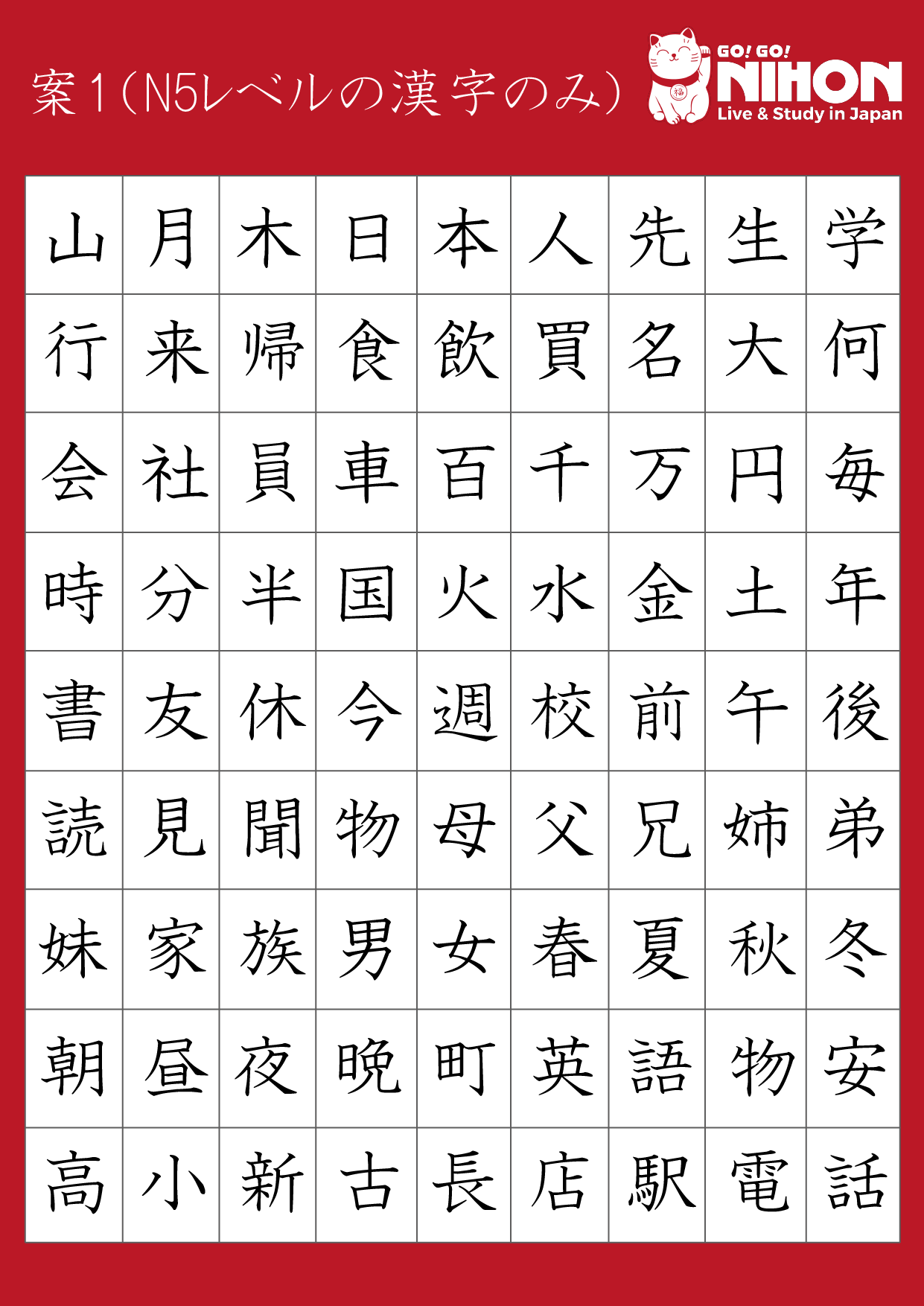
Attached is a Kanji practice booklet that you can print off and use to perfect stroke order along with the videos you will find in the Kanji Practice lessons.
Furigana
We will now start to use Kanji throughout lessons from this point on, to help you get used to seeing Kanji and begin to understand it.
To help you understand the pronunciation of words we have yet to teach, we will use Furigana.
Furigana is a Japanese reading aid, consisting of hiragana, printed next to or above a kanji to indicate its pronunciation. An example of this is below:
場所 = Location: 教室 = classroom